
Many people think the mold problem is solved when the visible patch disappears. A property owner scrubs a discolored wall, the staining lifts, and the problem seems finished.
Certain mold species don’t behave that way. They produce mycotoxins, chemical compounds that bond to drywall, wood, and insulation fibers on a molecular level. These compounds remain active long after the spores themselves are wiped away.
That gap between what’s visible and what’s chemically embedded is exactly why Rapid Ash Response treats mold remediation in Philadelphia, PA, as a chemistry problem, not a cleaning problem.
What Spore Clearance Actually Removes
Spore clearance addresses the reproductive units mold uses to spread. A technician physically removes colonies from a surface, often paired with an antimicrobial spray, and the visible growth stops.
This process has real value. It’s fast, it’s affordable, and for surface-level, low-toxicity mold, it often does the job. But spore removal targets what mold is doing to reproduce, not what it has already released chemically into a material.
Why Mycotoxins Don’t Leave With the Spores
Mycotoxins are secondary metabolites, byproducts certain fungi generate as a defense mechanism. Unlike spores, they aren’t living organisms that can simply be wiped off. They bind to porous materials such as:
- Drywall paper and gypsum core
- Wood framing and subflooring
- Carpet padding and fabric insulation
- HVAC duct lining
Once bonded, these compounds can off-gas or release particulates into indoor air for months, triggering respiratory irritation, headaches, and allergic responses in occupants who assume the danger passed with the last cleaning.
How Mycotoxin Remediation Differs From Standard Cleanup
Mycotoxin remediation works at the material level rather than the surface level. Instead of treating a wall as clean once mold is gone, technicians evaluate whether the substrate itself has absorbed toxic compounds.
This is where a documented mold inspection becomes the deciding factor. Air sampling, moisture mapping, and material testing identify whether mycotoxins have penetrated beyond what a cleaning solution can neutralize. If they have, cleaning is replaced with controlled removal: cutting out affected drywall, encapsulating structural wood, or replacing insulation that can’t be chemically restored.
Black Mold and Why It Raises the Stakes
Stachybotrys chartarum, commonly called black mold, is one of the most prolific mycotoxin producers found in residential and commercial structures. Its presence typically shifts a project from routine cleanup to black mold remediation, involving containment barriers, negative air pressure, and disposal protocols designed to keep spores and toxic particulate from spreading to unaffected areas during removal.
Signs a Property Needs More Than Wiping
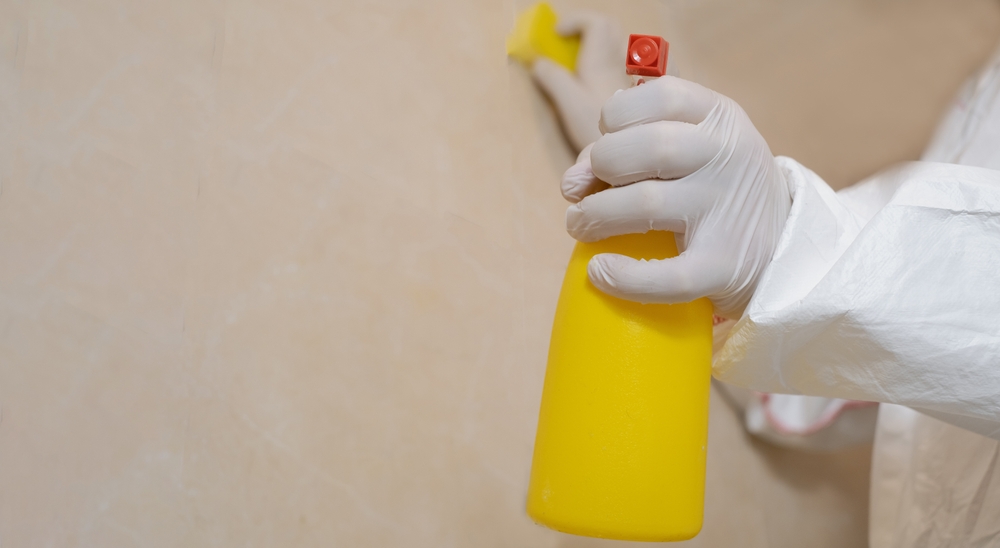
Property owners often reach for a spray bottle when the smarter move is calling in specialists. Warning signs that surface cleaning won’t be enough include:
- Musty odor persisting after visible mold is removed
- Recurring water damage in the same location
- Discoloration returning within weeks of cleaning
- Occupants reporting symptoms that improve when away from the building
Flooding, burst pipes, or storm damage compress the timeline further, which is why emergency mold remediation exists as a distinct service category, addressing saturated materials before mycotoxin-producing species have a chance to establish themselves.
FAQ
Can mycotoxins still affect health after mold has been visibly removed?
Yes. Because mycotoxins bond to porous materials rather than sitting on the surface, they can continue releasing particulates into indoor air even after visible growth is gone, which is why symptoms sometimes persist post-cleanup.
How is mycotoxin contamination actually tested?
Testing typically involves air sampling, swab samples from affected materials, and sometimes laboratory analysis of bulk material to determine whether toxic compounds have penetrated below the surface layer.
Are store-bought mold test kits reliable for detecting mycotoxins?
Store-bought kits generally detect spore presence, not mycotoxin concentration. They can indicate mold is present but rarely provide the material-level data needed to determine whether remediation or simple cleaning is appropriate.
Getting the Right Response for the Right Problem
Surface cleaning and molecular-level remediation solve two different problems, and confusing one for the other is how minor mold issues turn into long-term air quality complaints. A property with a genuine mycotoxin problem needs professional mold remediation grounded in testing, not guesswork.
Rapid Ash Response provides 24/7 emergency response for properties dealing with active water intrusion or mold discovery, backed by IICRC-certified property damage specialists who can distinguish a straightforward cleaning job from one requiring material removal. For property owners working through the aftermath of storm or water damage, dual restoration and insurance claims advocacy keeps the remediation process and the claims process moving together instead of stalling out separately.
Reach out to us now for dependable mold remediation.